.png)

High Wind Tree Damage: Protect Your Home and Trees


FORREST TREE SERVICE
📞 Call now for fast, professional tree services in Pueblo, CO
(719) 283-1536
If you live in Pueblo, you know how powerful our wind can get. Gusts often reach 50–70 mph, turning trees into a serious safety concern for homeowners. Every year, we see cracked trunks, split stems, uprooted trees, and heavy limbs falling onto yards, driveways, and roofs.
Most wind-related tree failures aren’t random. They happen because of structural weaknesses, drought stress, or previous pruning damage that finally gives way when strong gusts hit.
As an ISA Certified Arborist-owned company, we help Pueblo homeowners understand why trees fail during high winds, how to identify risk factors, and when to call for professional help.
Following the International Society of Arboriculture (ISA), Tree Care Industry Association (TCIA), and ANSI A300 standards ensures the safest, most effective care for trees in Pueblo, Colorado and surrounding areas.
Why Trees Fail During High Winds in Pueblo
Pueblo’s semi-arid climate, combined with occasional heavy storms, makes wind damage more likely. There are several common factors:
1. Drought-Stressed Roots
Trees in Pueblo often face chronic water stress. Shallow roots develop when trees receive frequent shallow watering or grow in compacted soil. When high winds hit, shallow roots can fail to anchor the tree properly.
Common signs include:
Leaning trees after storms
Raised soil or heaving around the base
Entire root plates tipping
Proper root health is critical. Deep, infrequent watering and healthy soil structure strengthen anchorage and reduce the likelihood of uprooting during strong wind events.
2. Structural Weakness in the Canopy
Many trees look healthy from the outside but are structurally vulnerable. Weak attachments, decay, and overextended limbs increase failure risk. Common structural issues include:
Co-dominant stems with included bark
Long, unsupported lateral limbs
Previous topping or improper pruning wounds
Internal cavities or decay
Following ANSI A300 standards for pruning helps reduce end-weight on heavy limbs and improves branch attachment strength, decreasing wind damage risk. Our professional arborists are trained to spot and correct these weaknesses before they become a problem.
3. Poor Pruning Practices
Improper pruning can make trees more vulnerable to high winds. This includes:
Topping trees
Over-thinning or removing too much interior canopy
Lion-tailing, which leaves heavy limbs at the ends of branches
Cutting back limbs without considering structure
Proper pruning follows ANSI A300 standards, which emphasize selective reduction and structural balance rather than extreme canopy removal. Healthy interior foliage is essential for distributing wind load and keeping trees stable during storms.
Common Types of Wind Damage in Pueblo
During high wind events, we commonly see:
Broken Limbs: Large branches snap because of overextension, decay, or improper pruning.
Split Trunks: Co-dominant stems can split under pressure.
Uprooted Trees: Often caused by shallow roots, saturated soil, or compacted clay soil common in Pueblo County.
Secondary Failures: Broken branches may fall days after the storm, even when it seems the danger has passed.
Warning Signs That Your Tree Could Fail
Before the next wind advisory, check your property for:
Fresh cracks in major limbs or the trunk
Noticeable leaning that wasn’t present before
Soil heaving around the base of the tree
Large dead or hanging branches
Mushrooms, fungal growth, or other signs of decay
Split trunks at co-dominant stems
If your tree has shifted, cracked, or dropped large limbs, it may not survive the next gust. Acting early can prevent damage and protect your home, vehicles, and family.
What You Can Do Before High Winds Hit
You don’t have to wait for damage to occur. Preparation makes all the difference.
Schedule a Tree Risk Assessment
A professional tree risk assessment evaluates structural integrity, root stability, and potential targets beneath the canopy, including homes, driveways, and walkways.
ISA Certified Arborists follow industry standards to identify hazards
TCIA practices emphasize safety-first procedures
Risk assessment is about informed decision-making, not unnecessary removal
Invest in Structural Pruning
Structural pruning improves tree stability and reduces the chance of wind-related failure. Proper pruning can:
Reduce limb weight and wind resistance
Correct co-dominant stems and weak unions
Improve canopy balance
Promote long-term health
Young trees benefit from early structural pruning, while mature trees may need selective weight reduction or cabling.
Consider Cabling and Bracing
Some high-value or high-risk trees may benefit from cabling and bracing systems. These supplemental supports help reduce failure risk but are not permanent fixes.
Not every tree qualifies, but the right support can extend the safe life of important trees on your property.
Maintain Root Health
Wind resistance begins below ground. Steps to promote healthy roots:
Avoid compacting soil near the root zone
Water deeply and infrequently during drought periods
Apply mulch correctly (2–4 inches, not against the trunk)
Avoid cutting major roots during landscaping
Healthy roots provide the strongest anchorage against wind.
During High Wind Events
If winds are already strong:
Stay indoors and away from large trees and windows
Avoid parking vehicles under heavy limbs
Do not attempt to remove hanging branches
Tree failures often occur without warning. Safety is the top priority.

After the Storm: What to Do
Once winds subside:
Check for hanging limbs
Look for fresh cracks, splits, or signs of instability
Monitor trees for delayed failure in the days following the storm
TCIA safety guidelines strongly discourage DIY storm cleanup because storm-damaged trees are unpredictable, and tension within broken wood can release suddenly and result in an injury.
When Tree Removal Becomes Necessary
Sometimes preservation isn’t possible. Removal may be the safest option if:
The root plate has lifted significantly
The trunk is split through the main union
Decay compromises structural stability
The tree poses an immediate hazard
Removal decision should be based on a professional arborist’s evaluation, not panic or guesswork.
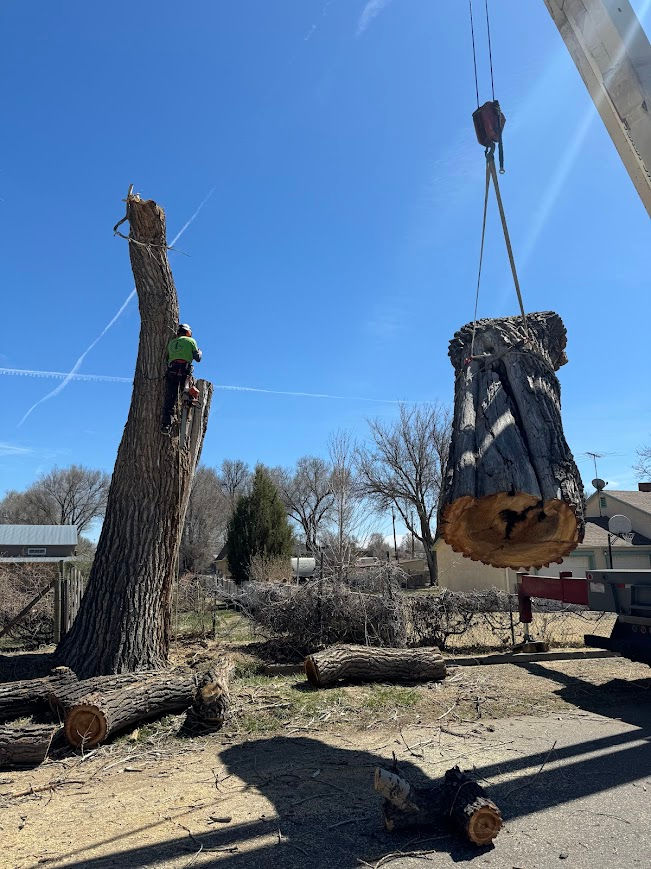
Our Pueblo Tree Service Crews Are On Standby
During high wind events, our crews are ready to respond quickly and safely.
Services include:
✔️ Emergency tree removal
✔️ Dangerous limb and hang-up removal
✔️ Leaning or partially uprooted trees
✔️ Hazard assessments after high winds
✔️ Storm cleanup and safety clearance
We prioritize restoring safety first and protecting your home, vehicles, and family.
Why Hire an ISA Certified Arborist in Pueblo?
Choosing a certified arborist means your tree is evaluated based on science, structure, and proven standards. An ISA Certified Arborist:
Understands tree biology and mechanics
Follows ANSI A300 pruning and safety standards
Prioritizes preservation whenever possible
Identifies risks before they become emergencies
We are a certified arborist-owned, fully licensed and insured, providing peace of mind and professional expertise.
Don’t Wait for the Next Wind Advisory
High winds are a regular part of life in Pueblo. Preparation can mean the difference between minor limb loss and serious property damage.
If you’re noticing cracked limbs, leaning trees, or other signs of instability, it is time to have your trees evaluated.
📞 Call now for a FREE estimate!
(719) 283-1536
Our professional and reliable arborist team provides emergency tree removal, structural pruning, cabling, and storm damage response throughout Pueblo and Pueblo County.
Your trees cannot choose when the wind will blow, but you can choose to be prepared.
About Forrest Tree Service |
-Owned by Forrest Knaus, an ISA Certified Arborist -Licensed and insured -Free estimates |

Comments